Perito Moreno Glacier
Perito Moreno Glacier
Facing Lake Argentino, Perito Moreno Glacier displays a glacial front 5 km wide. Walkways, cramponed trekking and spectacular calving events: an exceptional natural site in Argentine Patagonia.
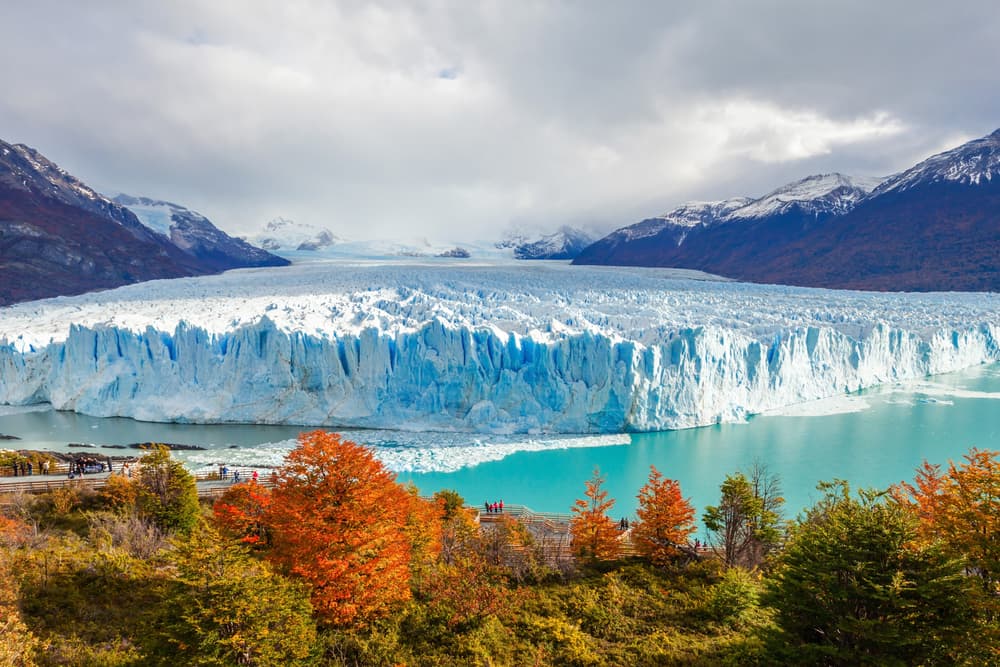
Perito Moreno Glacier spans approximately 250 km² within Los Glaciares National Park in Argentine Patagonia. Its glacial front, 5 km wide and 60 to 70 meters high above Lake Argentino, makes it one of the most accessible and active glaciers on the planet. Unlike most glaciers worldwide, it maintains dynamic equilibrium: it advances regularly, causing spectacular ruptures visible from the walkways.
Quick facts at a glance
- Entrance: paid (included in Los Glaciares National Park access fee)
- Recommended duration: 2 to 4 hours on the walkways; a full day if you combine trekking or boat tours
- Access: paved road from El Calafate (approximately 80 km); shuttles and organized excursions available from town
- What to wear: waterproof and windproof clothing essential; cool temperatures year-round
- Accessibility: the main walkways are wheelchair-accessible for much of the route
What you'll see
A network of wooden walkways descends in tiers facing the glacial front. From each level, the view shifts: compact blue ice, deep crevasses, unstable seracs. Lake Argentino, a milky blue charged with glacial flour, contrasts with the Patagonian beech forest (lenga) on the shores. Blocks of ice regularly break away with a dull roar — the phenomenon known as "calving."
History and context
The glacier bears the name of Francisco Moreno, an Argentine explorer and naturalist who charted Patagonia in the late 19th century. Los Glaciares National Park, established in 1937, has been a UNESCO World Heritage Site since 1981. Perito Moreno is fed by the Campo de Hielo Sur, the world's third-largest reserve of continental freshwater.
Highlights of your visit
Panoramic walkways
Three levels of walkways allow you to approach the glacial front to within 200 meters. Each platform offers a different angle on the ice wall. The lower level, at the lake's edge, provides the best sense of the glacier's true height.
Calving events
Blocks weighing several tons break away from the glacial front several times per hour. The sound often precedes the fall: a sharp crack, then a roar. Patience pays off — major falls are unpredictable but frequent.
Glacial dam rupture
Every few years, the glacier advances until it touches the Magallanes Peninsula, dividing the lake in two. Water pressure eventually pierces a tunnel through the ice, then triggers a spectacular rupture. This cycle, unique in the world, attracts thousands of visitors when events are announced.
Ice trekking (Big Ice / Minitrekking)
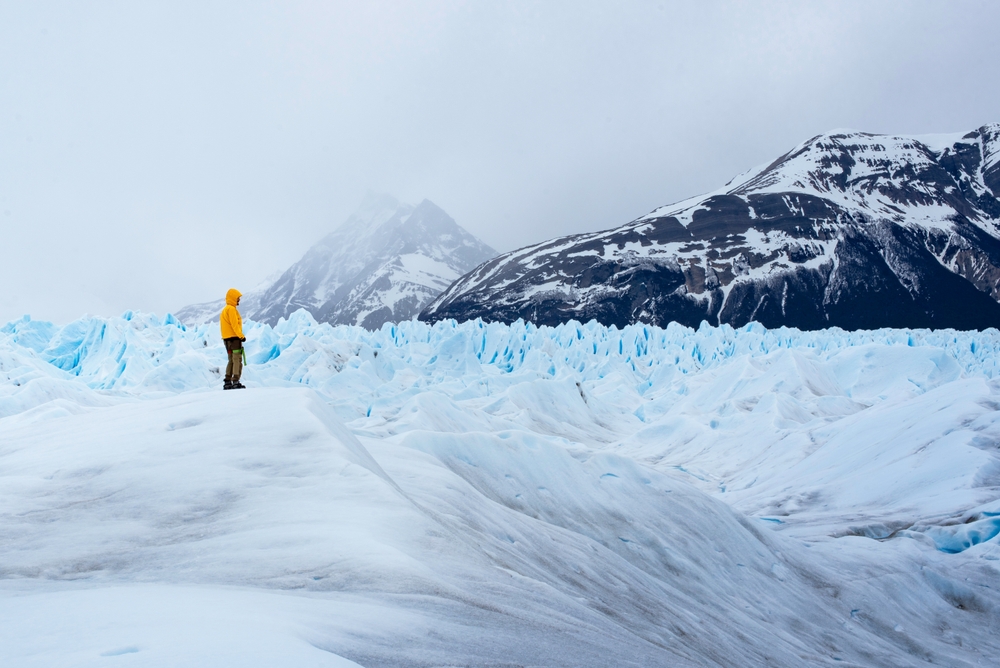
Authorized agencies offer cramponed walks on the glacier itself. Minitrekking lasts about one hour on the ice; Big Ice is a longer excursion for those in good physical condition. Booking essential in El Calafate.
Navigation on Lake Argentino
Boats trace the glacial front from the lake, offering a perspective impossible from the walkways: the glacier's immersed base, an intense blue, and drifting icebergs.
Photography tips
Morning light (before 10 a.m.) is softer and avoids harsh reflections on the ice. In the afternoon, the sun illuminates the glacial front directly from the west — the blues stand out better. Bring a polarizing filter to reduce reflections on the water. Ice falls are unpredictable: keep your camera ready. Frequent Patagonian rain can strike at any moment — protect your gear.
Location and access
The glacier lies approximately 80 km west of El Calafate, accessible via National Route 11 and then a paved provincial road. Shuttles depart daily from the town center. Most visitors arrive on an organized day-trip. El Calafate Airport (Comandante Armando Tola) receives direct flights from Buenos Aires and Bariloche.
In the vicinity
- El Calafate — the essential departure point, with accommodations, restaurants and trekking agencies.
- Upsala Glacier — the park's largest glacier, accessible only by boat from Puerto Bandera.
- Lake Argentino — Argentina's largest lake, whose turquoise waters border the front of Perito Moreno.
- Cerro Torre — mythical Andean wall, accessible from El Chaltén in the park's north.
- Cerro Fitz Roy — Patagonia's emblematic peak, starting point for many treks from El Chaltén.
Frequently asked questions
The park is open year-round. The Southern summer (November to March) offers the longest days and most pleasant temperatures. In winter, visitor numbers are lower and the raking light is interesting for photography, but cold and wind are intense.
Access to the walkways does not require prior reservation, but ice trekking excursions (Minitrekking, Big Ice) are booked in El Calafate, ideally the day before or several days ahead during peak season.
No. Access to the glacier's surface is strictly reserved for excursions led by authorized guides. The panoramic walkways, however, are freely accessible during park opening hours.
Allow a minimum of 2 hours to walk the walkways at your own pace. If you add a boat tour or ice trekking, plan a full day from El Calafate.
The main walkways are wide and accessible by stroller or wheelchair for much of the route. Ice trekking is reserved for adults in good physical condition.
Yes, photography is allowed throughout the walkways and from boats. No particular restrictions apply for personal use.
Interested in this visit?
We can include it in your personalised itinerary.