Patagonia of the Lakes
At the foot of the Andes, between Bariloche and Lanín volcano, a Patagonia of glacial lakes, araucaria forests and villages steeped in Andean and Mapuche heritage.
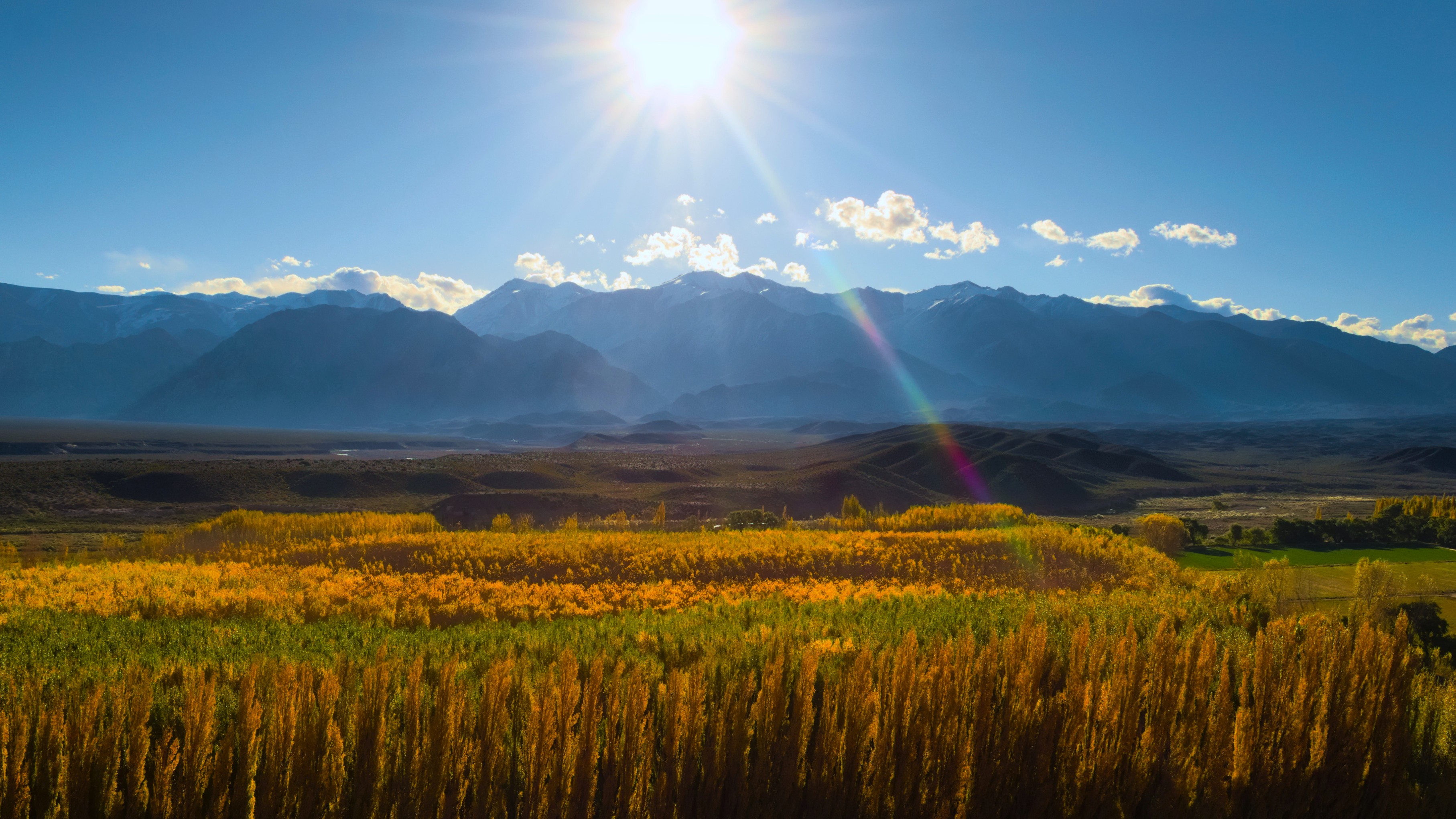
Patagonia of the Lakes occupies the northern edge of Argentine Patagonia, along the Andes, between the provinces of Neuquén and Río Negro. Our team often describes it as a hinge: you leave behind the arid steppes of the country's interior and enter a world of humid forests, glacially-formed lakes and volcanoes on the Chilean side. The contrast lies in geography: westerly winds dump rain and snow on the Andes, creating the Valdivian and Andino-Patagonian forest, before everything dries abruptly within tens of kilometres toward the east.
San Carlos de Bariloche, founded in the late 19th century on the southern shore of Nahuel Huapi Lake, remains the gateway. The city bears the mark of Swiss, German and Italian immigration from the early 20th century: stone and wood architecture of the Centro Cívico designed by Ezequiel Bustillo, chocolateries along Calle Mitre, craft breweries. Some 200 km further north, San Martín de los Andes, positioned on the banks of Lake Lácar, offers a quieter rhythm, with chalet-style urbanism mandated by municipal regulation. Between the two, the Route of the Seven Lakes (RN 40, 110 km) strings together Lakes Espejo, Correntoso, Escondido, Villarino, Falkner, Machónico and Lácar, crossing Nahuel Huapi and Lanín national parks.
Nahuel Huapi National Park covers 7,050 km² around the lake of the same name, whose depths reach 460 m and surface spans 530 km². You can explore it by boat to Victoria Island and the arrayán forest of Quetrihué, by hiking toward the Frey refuge or Cerro López, or by car on the Circuito Chico, a 60 km loop around the Llao Llao peninsula. Further north, Lanín National Park is dominated by its namesake volcano (3,776 m), snow-capped year-round, and shelters pehuén forests—the araucaria sacred to Mapuche communities still living on these lands, who harvest its nuts, the piñón, basis of ancestral cuisine.
The Mapuche presence is a dimension we take time to explore with our travellers. Several communities, such as Curruhuinca near San Martín or Paineo near Junín de los Andes, offer guided encounters: stories about the rewe, gastronomy centred on curanto cooked in earth, textile crafts with vegetable dyes. It is a reading of the territory that transforms one's perspective on the landscapes traversed.
Regional cuisine blends these heritages. Rainbow trout is caught from the Limay and Chimehuín rivers, red deer appears in mitteleuropäisch goulash, raspberries and blackcurrants hail from El Bolsón, a village founded by a hippie community in the 1970s and faithful to its artisanal market on Tuesdays, Thursdays and Saturdays on Plaza Pagano. The region's craft beers, grouped under the Patagonia label, accompany a gastronomic scene that has intensified over the past fifteen years.
The local economy relies largely on tourism, but also on sport fishing, which attracts international clientele between November and April, and on sheep and cattle ranching along the steppe margins. Villa La Angostura, 80 km north of Bariloche on the opposite shore of Nahuel Huapi, serves as a more intimate intermediate base, with direct access to Los Arrayanes National Park and the Cardenal Samoré border crossing into Chile.
To Discover
Route of the Seven Lakes by car. 110 km of RN 40 between Villa La Angostura and San Martín de los Andes, skirting seven glacial lakes framed by coihue and lenga forests. Allow a full day with stops for swimming and a packed lunch at Pichi Traful.
Frey Refuge and Cerro Catedral. A 4 to 5-hour hike from the Catedral base to the Frey refuge at 1,700 m, in a granite cirque above an alpine lake. Recognized climbing spot and backcountry ski terrain in the austral winter.
Lanín Volcano and araucaria forests. In the heart of Lanín National Park, hikes at the foot of the 3,776 m snow-capped cone, through pehuén woods where some specimens exceed 1,000 years old. Access from Junín de los Andes.
Meeting a Mapuche community. A day at Lof Curruhuinca or Ruca Choroi: stories of the territory, cuisine with piñón and curanto, demonstrations of vertical loom weaving. Revenue goes directly to the community.
El Bolsón and the Río Azul valley. 130 km south of Bariloche, a market village and microbrewery hub, starting point for 2 to 4-day treks toward the Hielo Azul and Cajón del Azul refuges, through Valdivian forest.
When to Visit
The prime hiking season runs from mid-December through late March, with daytime temperatures of 18 to 25 °C in Bariloche and nights remaining cool at altitude, around 5 to 10 °C in the refuges. January and February concentrate Argentine holidays: Bariloche and Villa La Angostura accommodations fill quickly, and we recommend booking six to eight months in advance for this window. April delivers remarkable autumn colours across lengas and ñires in calmer light, but some refuges close by mid-April.
The austral winter, June to September, transforms the region into ski terrain: Cerro Catedral, 20 minutes from Bariloche, totals roughly 120 km of runs between 1,030 and 2,180 m. Snowfall concentrates in July and August. May, October and November form delicate shoulder seasons: snow melts, many high trails remain closed, some accesses turn muddy. On precipitation, the western fringe receives 2,000 to 3,000 mm yearly concentrated in winter, while the steppe 50 km east drops below 300 mm.
Practical Tips
We recommend a minimum of 5 full days on site to link Bariloche, the Circuito Chico, the Route of the Seven Lakes and San Martín de los Andes, and 7 to 8 days if you add a 2-day hike with a night in a refuge or a trip to El Bolsón. Access is via Bariloche airport (BRC), connected to Buenos Aires in 2 hours 20 minutes by several daily flights, or San Martín de los Andes airport (CPC), more limited. Internal distances are covered by rental car, a format we favour for flexibility on photo stops and trail access.
The most coherent combination remains with southern Patagonia (El Calafate, El Chaltén) to contrast northern forests with southern glaciers and steppe, noting that an internal flight via Buenos Aires is often necessary. For travellers with three weeks, the chain with Mendoza and Cuyo works well thanks to a direct Bariloche-Mendoza flight. Comfort levels range from high-end fishing lodges on the Chimehuín riverbanks to historic estancias like Peuma Hue, through city-centre hotels. The region suits families particularly well, intermediate-level hikers and those moved by landscapes of water and forest, less so travellers seeking the mineral aridity typical of southern Patagonia.