Reserva Natural Cabo Dos Bahías
About twenty kilometres from Camarones, Cabo Dos Bahías reserve protects a vast colony of Magellanic penguins, sea lions and rich coastal birdlife in a wild, unspoilt Patagonian setting.
About twenty kilometres from Camarones, on the Patagonian coast of Chubut, Reserva Natural Cabo Dos Bahías protects one of Argentina's largest colonies of Magellanic penguins. The site is also home to sea lions, guanacos, Patagonian grey foxes and remarkable coastal birdlife. Far from mass tourism circuits, it is a wild space where wildlife moves within metres of visitors, without heavy infrastructure.
Practical information at a glance
- Access: dirt track from Camarones; a vehicle with good ground clearance is recommended, especially after rain.
- Admission: charged (managed by Chubut province); verify the fee with Camarones town hall or the local tourism office.
- Best time to visit: September to March for penguins (nesting and chick-rearing); October–November for births.
- Recommended duration: at least half a day to walk the marked trails.
- What to wear: warm clothes and windproof jacket even in summer — Patagonian wind is constant.
- Accessibility: trails are unpaved earth; wheelchair access is difficult.
What you'll see
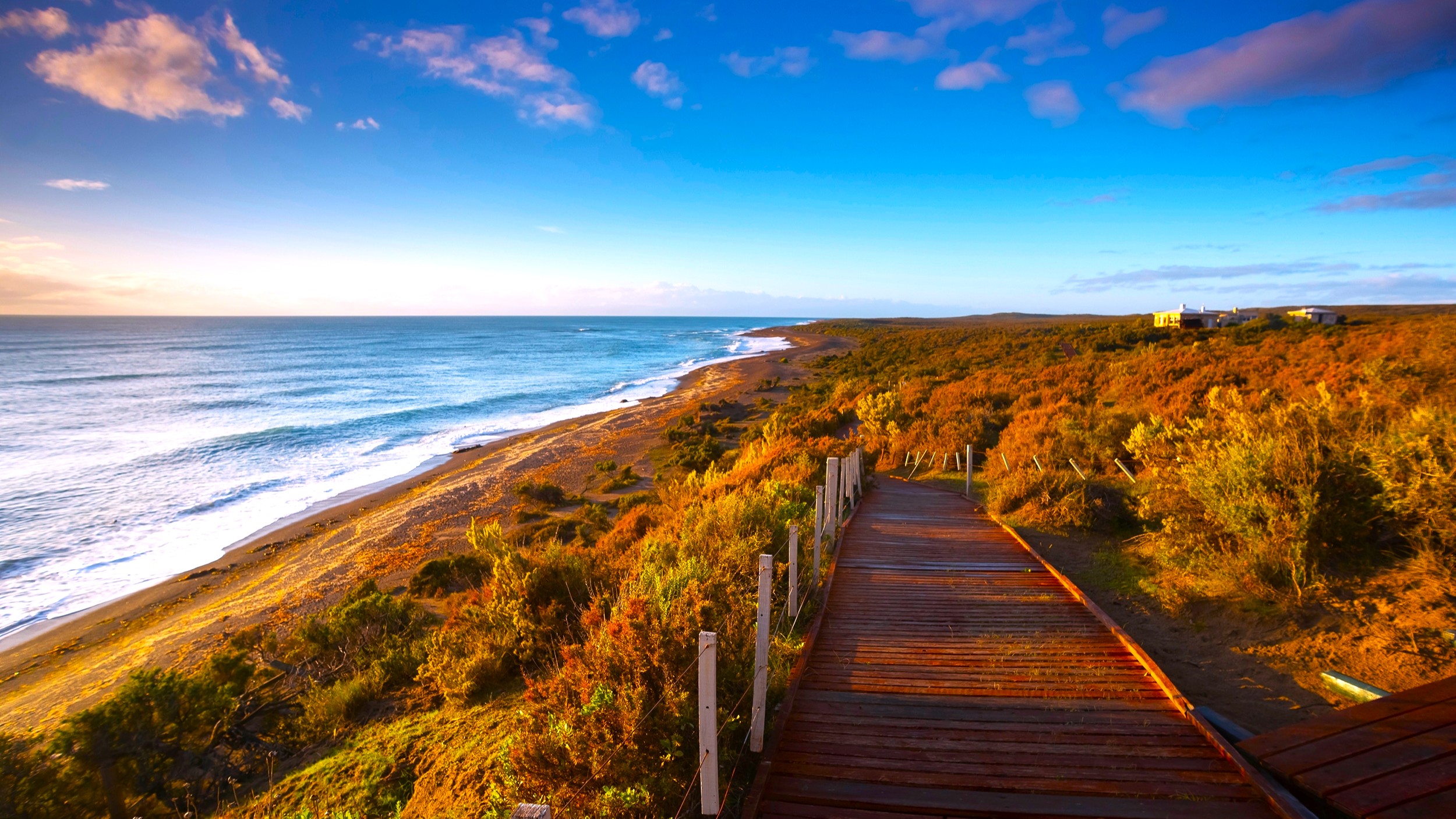
The Magellanic penguin colony numbers tens of thousands of breeding pairs. The animals dig burrows in the scrubland steppe and move freely along the trails. Sea lions (Otaria flavescens) occupy the rocky shoreline. Guanacos, Patagonian grey foxes and several raptor species complete the wildlife picture. The jagged coastline offers views over two distinct bays that give the cape its name.
History and context
The reserve was established by Chubut province to protect a coastal ecosystem representative of Atlantic Patagonia. Cabo Dos Bahías is part of a group of Patagonian sites recognised for their marine biodiversity, continuing the work of the Valdés Peninsula, a UNESCO World Heritage site. Camarones, the nearest town, is historically linked to artisanal fishing and sheep farming.
Highlights of your visit
The penguin colony
Marked trails run alongside burrows just metres away. The penguins, not easily frightened, generally ignore visitors. In November and December, chicks covered in grey down are particularly visible at burrow entrances.
Sea lions on the rocks
A natural viewpoint allows observation of sea lion groups resting on rocky platforms. Adult males, impressive in size, stand out clearly from females and young animals.
Coastal birdlife
Royal cormorants, petrels, sandpipers and terns frequent the shoreline. The site is favoured by birdwatchers for the density and diversity of species observable at a single location.
Photography tips
Morning light, low across the steppe, brings out the penguins and coastal landscapes beautifully. Avoid using flash near animals. A moderate telephoto lens (70-200 mm) is sufficient for sea lions from the viewpoints. Respect the minimum distances marked on signs — getting too close stresses the animals and is prohibited.
Location and access
The reserve is located about 30 km south-east of Camarones via an unpaved track. Camarones is accessible from Comodoro Rivadavia (about 250 km to the south) or from Trelew via National Route 3. There is no regular public transport to the reserve; renting a vehicle or booking an organised excursion from Camarones are the most practical options. Local agencies offer guided day trips.
In the surrounding area
- Valdés Peninsula — UNESCO site about 300 km to the north, with southern right whales, elephant seals and orcas.
- Punta Tombo — the largest Magellanic penguin colony on the continent, about 180 km to the south.
- Camarones — small fishing port, logistical base for visits, with a museum dedicated to local marine wildlife.
Frequently asked questions
From September to March, Magellanic penguins are present for nesting. October and November correspond to births; January and February, chicks begin to moult. Outside this period, the colony is virtually deserted.
The dirt track is passable by most vehicles in dry conditions, but a vehicle with good ground clearance is recommended after rain. Check the track condition with Camarones tourism office before departing.
The two sites are about 180 km apart. It is possible to visit both over two days by stopping in Camarones or Rawson. Some agencies in Trelew offer combined itineraries.
Photography is permitted. Stay on marked trails and respect the minimum distances indicated. Flash is not recommended near animals.
On-site infrastructure is very limited. Bring water, food and warm clothing before leaving Camarones. Check with the reserve about available facilities at the time of your visit.
Interested in this visit?
We can include it in your personalised itinerary.