El Calafate and the Glaciers
Gateway to Los Glaciares National Park, El Calafate faces the Perito Moreno, one of the world's rare glaciers that has not retreated in a century.
El Calafate is a service town situated on the southern shore of Lake Argentino, approximately 80 kilometres from the entrance to Los Glaciares National Park. Established relatively recently, it developed from the 1940s onwards around the estancia and sheep herding, before glacier tourism became, since the 1990s, its economic driver. Comandante Armando Tola International Airport, opened in 2000 some twenty kilometres from the centre, now receives direct flights from Buenos Aires, Ushuaia and Bariloche, making El Calafate one of the most convenient gateways to southern Patagonia.
Los Glaciares National Park, inscribed on the UNESCO World Heritage list since 1981, covers 7,269 square kilometres and is home to 47 major glaciers fed by the Southern Ice Field, the world's third-largest reserve of frozen fresh water after Antarctica and Greenland. Perito Moreno is its centrepiece: 30 kilometres long, 5 kilometres wide at the front, 60 metres high above the lake. Its particular characteristic lies in its mass balance: unlike the majority of Patagonian glaciers, it does not retreat. Every few years, its front butts against the Magallanes Peninsula and forms an ice dam that eventually ruptures in a spectacular collapse, an event called ruptura.
The climate is dry and windy, classified as semi-arid to steppe. El Calafate receives less than 200 millimetres of precipitation per year, compared to the 4,000 millimetres that fall on the summits of the ice field, 80 kilometres to the west. This stark difference creates the landscape contrast that defines the region: the shores of Lake Argentino are covered in low steppe, calafate bushes (Berberis microphylla, whose violet berry gives the town its name) and clumps of coirón grass, while the cordillera remains shrouded in clouds and ice. Guanacos, grey foxes and Andean condors roam just outside town, particularly along Route 11 which leads to the glacier.
Beyond Perito Moreno, Lake Argentino, which extends over 1,466 square kilometres, provides access to the northern arms of the park. Boats depart from Puerto Bandera, 47 kilometres from the centre, to reach the Upsala (the park's largest glacier, 765 square kilometres), Spegazzini (the highest, with a front soaring to 135 metres) and Onelli glaciers. The navigation crosses the Iceberg Canal, dotted with icebergs calved from the Upsala whose blue tint varies with ice density. Further south, at the Chilean border, Lake Roca and the Cerro Cristal area offer walks across steppe and southern beech forest for those seeking to escape the glacier circuits.
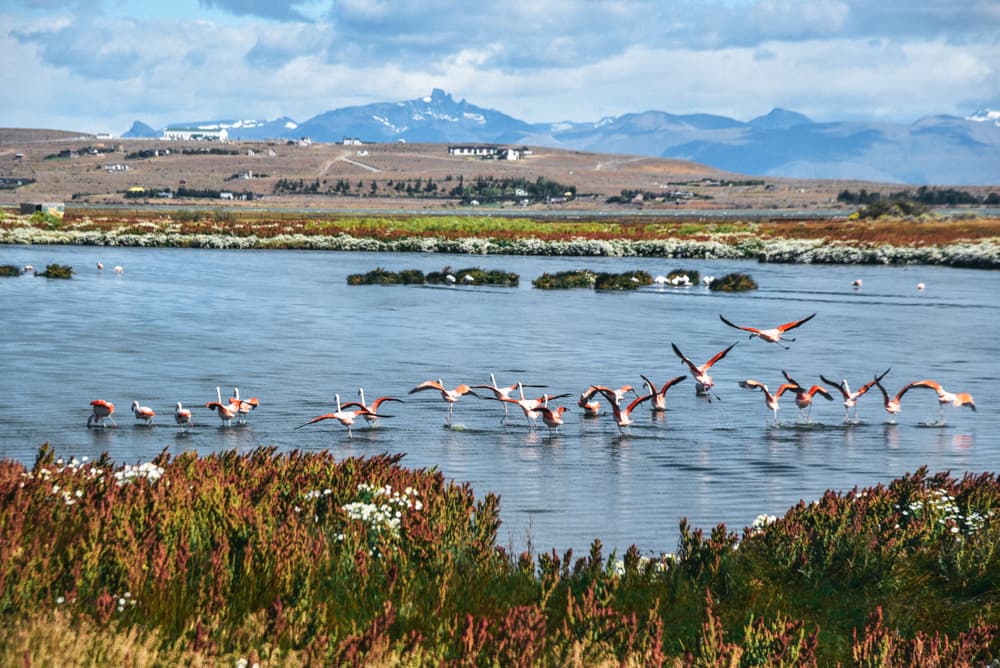
The town itself, home to approximately 25,000 people, stretches along Libertador Avenue. Here you will find parrillas specialising in Patagonian lamb roasted whole over a fire (cordero al palo), chocolate shops working with calafate berries, and the Glaciarium, a glaciology museum located 6 kilometres from the centre that provides useful scientific context before visiting the park. Laguna Nimez Reserve, on the lake's edge, offers a one-hour walk among Andean flamingos, black-necked swans and Magellanic snipe. The National Day of Lake Argentino, celebrated each 15 February, marks the anniversary of the town's founding in 1944.
The region's appeal lies less in an accumulation of sites than in the opportunity to observe an active and accessible glacier system. Perito Moreno is one of the world's rare glaciers where you can stand 200 metres from the front, on metal catwalks, and hear the ice creaking as it moves, approximately two metres per day at the centre.
Must-See Attractions
Perito Moreno Catwalks. Four circuits of metal catwalks totalling nearly 4 kilometres face the southern front of the glacier. Plan for a half-day to witness several ice blocks fall, especially between 1 p.m. and 4 p.m. when the sun heats the exposed face.
Ice Trekking. Boat crossing of the Iceberg Canal followed by 1 hour 30 minutes of walking in crampons on the glacier, with a roped guide. Accessible without prior experience, limited to ages 8–65, book several weeks in advance during high season.
Navigation to Upsala and Spegazzini. Full day departing from Puerto Bandera. The boat heads up the North Arm amid icebergs calved from Upsala, then approaches the 135-metre front of Spegazzini. Late-morning light offers the best rendering on the blue ice.
Estancia Cristina, northern shore of the lake. Historic sheep farm founded in 1914, accessible only by boat from Puerto Bandera. A 4x4 track leads to the Upsala viewpoint for sweeping views over the glacier. Possibility of staying one night to escape the daily circuits.
Laguna Nimez Reserve. A ten-minute walk from El Calafate's centre, 2.5-kilometre trail along the shore of Lake Argentino. Observe flamingos, black-necked swans and Patagonian steamerducks, especially in late afternoon.
When to Visit
The useful season runs from October to April. From December to February, the Southern summer, daytime temperatures range between 15 and 22 degrees, with days lasting up to 17 hours of daylight in December. This is the busiest period: El Calafate's hotels are fully booked months in advance and the Perito Moreno catwalks receive up to 4,000 visitors per day. October, November, March and April offer a better compromise: 8 to 15 degrees, softer light on the ice, and considerably fewer people on the trails. In March, the southern beech foliage turns red, completely changing the landscape palette.
From June to August, winter, many operators close, navigations on Lake Argentino are suspended due to floating ice, and only the Perito Moreno catwalks remain open with limited access. Temperatures drop between -5 and 5 degrees, and snowfall can block Route 11. The wind, present year-round, reaches its maximum between November and January, with gusts commonly reaching 80 km/h on the lake, which can cancel navigations.
Practical Advice
We recommend 2 to 3 nights on site. Two nights suffice for Perito Moreno (a full day) and a half-day free in town or at Laguna Nimez. Three nights allow you to include either the ice trekking, or the navigation to Upsala and Spegazzini, or a day at Estancia Cristina. Beyond that, better to move on to El Chaltén, 220 kilometres north via Route 40, for hiking around Fitz Roy.
El Calafate airport makes it a natural hub in a Patagonian circuit. The most coherent combinations: with El Chaltén Fitz Roy (3 hours' drive, daily shuttle transfer), with Torres del Paine on the Chilean side (5 to 6 hours via the Cerro Castillo border post), with Ushuaia (1 hour 20 minute direct flight) for those wanting to reach the Beagle Channel. Península Valdés and the Lake Region are logistically more distant and require an intermediate flight via Buenos Aires or Bariloche. Hotel comfort levels are good, with options ranging from historic estancias to contemporary lodges overlooking the lake. The region suits a broad audience: walking on the catwalks is accessible to families with children from age 6 onwards, and hikers will find their interest in the ice trekking or the Cerro Cristal trails.