Santa Cruz
Santa Cruz
Thousand-year-old glaciers, mythical peaks, and isolated estancias: Santa Cruz encompasses the very essence of Argentine Patagonia, between the Atlantic and the Andes.
Santa Cruz is a vast province located in southern Argentina, at the heart of Patagonia. Positioned east of Chile and north of Tierra del Fuego, it is renowned for its breathtaking landscapes, impressive glaciers, and unique wildlife. It stands as an essential destination for nature lovers and adventure enthusiasts.
History
The northwest region of Santa Cruz province is rich in archaeological sites, notably prehistoric caves. Evidence of human occupation dating back nearly 13,000 years has been discovered through carbon-14 dating.
During the 19th century, explorers played a crucial role in Santa Cruz's colonization. Luis Piedra Buena established a base in 1859 on Pavón Island. Francisco Pascasio Moreno, known as Perito Moreno, founded a base at Puerto Deseado between 1876 and 1884.
In 1883, Argentines founded the city of Rio Gallegos on the initiative of Antonio Oneto. That same year, the National Territories law established the National Territory of Santa Cruz. The approximate boundaries of this area correspond to those of today, despite Argentina's claims to the Andean peaks as its western limit.
Characteristics
Santa Cruz province spans approximately 243,943 km², bordered by the Atlantic Ocean to the east and the Andes mountain range to the west, where it shares a natural boundary with Chile. It is home to 27 protected areas and 7 national parks. This territory comprises varied landscapes: from arid steppes to lush temperate forests, alongside snow-capped mountains and imposing glaciers.
Santa Cruz is home to several paleao-basins belonging to ancient watercourses, some of which reappear during spring thaw or after exceptional rainfall episodes. Today, this province is traversed by a dense network of rivers that collect meltwater from glaciers, including:
- The Rio Santa Cruz
- The Rio Coig
- The Rio Gallegos
- The Rio Deseado
- The Rio Chico
- The Rio Pinturas.
Among the province's numerous lakes, you'll find notably:
- Lake Buenos Aires
- Lake Viedma
- Lake Argentino
- Lake Pueyrredón
- Lake Belgrano
- Lake San Martin.
Climate
Santa Cruz province is a land of contrasts marked by significant climatic variations depending on the region and season. To the east and center, it is dominated by an arid Patagonian climate, while the west, influenced by the Andes, presents a cold and humid climate.
Generally, Santa Cruz is one of Argentina's coldest regions. Summer temperatures oscillate between 5°C and 15°C, and winters are characterized by short, freezing days, often accompanied by snowfall. Although precipitation is scarce, powerful and persistent winds accentuate the climate's harshness, particularly in steppe areas.
Santa Cruz is accessible by several means of transport depending on your point of departure and itinerary. Here are the main options for getting there:
By plane
Flying is the fastest and most convenient way to reach Santa Cruz, especially if you're departing from Buenos Aires or other major Argentine cities. The province's main airport is Rio Gallegos (Piloto Civil Norberto Fernández International Airport). Regular flights connect Buenos Aires to Santa Cruz's capital.
For those planning to visit Los Glaciares National Park and Perito Moreno glacier, you can fly into El Calafate airport (Comandante Armando Tola International Airport). Direct flights are available from Buenos Aires and other cities like Ushuaïa or Bariloche.
Designated for domestic flights, the province has Puerto Deseado airport (serving the Atlantic coast).
By car
If you enjoy driving freedom, National Route 3 (Ruta Nacional 3) is an excellent option. It traverses the province's eastern region from north to south and connects Buenos Aires to the entire Patagonian east coast, passing through cities like Bahia Blanca and Viedma. Additionally, interior routes, such as National Route 40, cross the Andes and offer spectacular scenery, notably around El Calafate and El Chaltén.
By bus
Several long-distance bus companies connect Buenos Aires to Rio Gallegos, El Calafate, and other Santa Cruz cities. The bus journey from Argentina's capital can take over 30 hours but is often comfortable. It constitutes an economical option for travelers with more time.
By boat
Although less common, it is possible to visit certain parts of Santa Cruz's Atlantic coast via cruises or ferries. Boats are often used and ideal for observing marine life in places like Puerto Deseado. Some Patagonia cruises include stops along Santa Cruz's coasts.
Local Communities
Before European colonists arrived, Santa Cruz was inhabited by various indigenous peoples, including the Tehuelches (or Aonikenks). They resisted submission for a long time, even after Argentine independence. Their culture and lifestyle, adapted to Patagonia's harsh environment, continue to inspire local initiatives aimed at preserving this heritage.
Santa Cruz is also known for its estancias, traditional farms that play a central role in local culture. These vast properties, often dedicated to sheep ranching, offer visitors an immersion in rural Patagonian life. Some estancias welcome tourists, offering activities such as horseback riding, sheep-shearing demonstrations, and typical regional meals.
What to See?
Numerous attractions await discovery during a trip through Santa Cruz province. Here are some must-see places to visit:
Los Glaciares National Park
Los Glaciares National Park, a natural gem of Santa Cruz province, spans approximately 7,240 km², making it Argentina's largest national park. As its name suggests, the park is home to some of the planet's most spectacular glaciers, notably Perito Moreno. Created in 1937, it was designated a UNESCO World Heritage site in 1981 due to its exceptional beauty, geology, and wildlife. This park, bordered by Bernardo O'Higgins National Park in Chile, is famous for its spectacular landscapes dominated by majestic glaciers, including the renowned Perito Moreno. Accessible from the charming town of El Calafate, the park is a must-visit for nature lovers.
Cueva de las Manos (Cave of Hands)
Located in northern Santa Cruz, Cueva de las Manos is an archaeological site celebrated for its rock paintings dating back 9,000 to 13,000 years. Discovered in 1876 by Argentine explorer Francisco Moreno, it lies in the Rio Pinturas canyon, in the province's north. Over approximately 60 meters, the region's earliest inhabitants left negative hand impressions in red, yellow, ochre, black, and white hues, as well as hunting scenes featuring guanacos and nandus. You can also see geometric patterns such as spirals. This cave was inscribed in UNESCO's cultural heritage of humanity in 1999.
The Atlantic Coast
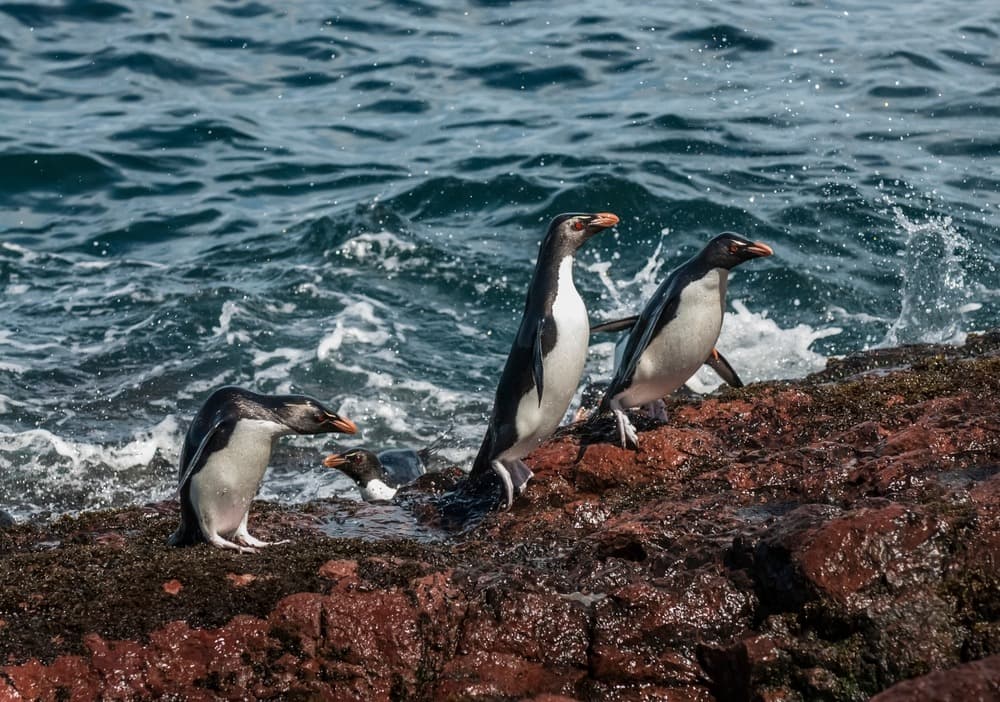
Santa Cruz is far more than just glaciers and mountains. Its long Atlantic coast is a haven for marine life. Visitors can observe sea lion colonies, elephant seals, dolphins, and even orcas. The nature reserve near Puerto Deseado is a favored spot for boating and birdwatching, particularly for Rockhopper penguins.
What to Do?
Santa Cruz province also offers numerous activities for outdoor enthusiasts.
Hiking and Trekking
Patagonia is a hiker's paradise, and Santa Cruz is no exception. It offers varied itineraries suited to all levels. Los Glaciares National Park, in particular, provides unforgettable experiences, with trails leading to natural wonders such as Cerro Fitz Roy, Laguna de los Tres, and more. The paths to Laguna Capri and Laguna Torre are also among the most sought-after, offering exceptional views of surrounding mountains and glaciers.
Boat Excursions on Rivers and Lakes
Exploring Santa Cruz's rivers and lakes is an unforgettable experience. Cruises on Lakes Argentino and Viedma, for example, allow you to discover the region's majestic glaciers from a different perspective.
Wildlife Observation
With its exceptional biodiversity, Santa Cruz is an ideal place for wildlife observation. Nature enthusiasts can encounter guanacos, nandus, condors, as well as marine species along the coast. The region is also a paradise for birdwatchers, thanks to species such as the Andean flamingo or the crested caracara.
Want to discover this destination?
Our local advisors design your tailor-made trip.