Reserva Natural Punta Norte
Reserva Natural Punta Norte
At the northeastern tip of the Valdés Peninsula, Punta Norte brings together sea lions, elephant seals, and—in March and April—orcas that deliberately beach themselves to hunt, a spectacle unique in the world and observable from land.
Punta Norte occupies the northeastern tip of the Valdés Peninsula in Argentine Patagonia. This isolated cape shelters one of South America's largest sea lion colonies and attracts orcas each austral autumn to hunt along the shore—a rare behavior found nowhere else in the world. The site lies within the protected zone of the Valdés Peninsula, inscribed on the UNESCO World Heritage list.
Essential Information at a Glance
- Access: dirt track from Puerto Pirámides or Puerto Madryn; vehicle recommended, the track can become impassable in rain.
- Entry: included in the Valdés Peninsula access fee, payable at the peninsula entrance barrier.
- Recommended duration: 2 to 3 hours on-site.
- What to wear: strong winds are frequent—warm clothing and a windbreaker are essential even during austral summer.
- Accessibility: unimproved terrain; wheelchair access is difficult.
What You'll See
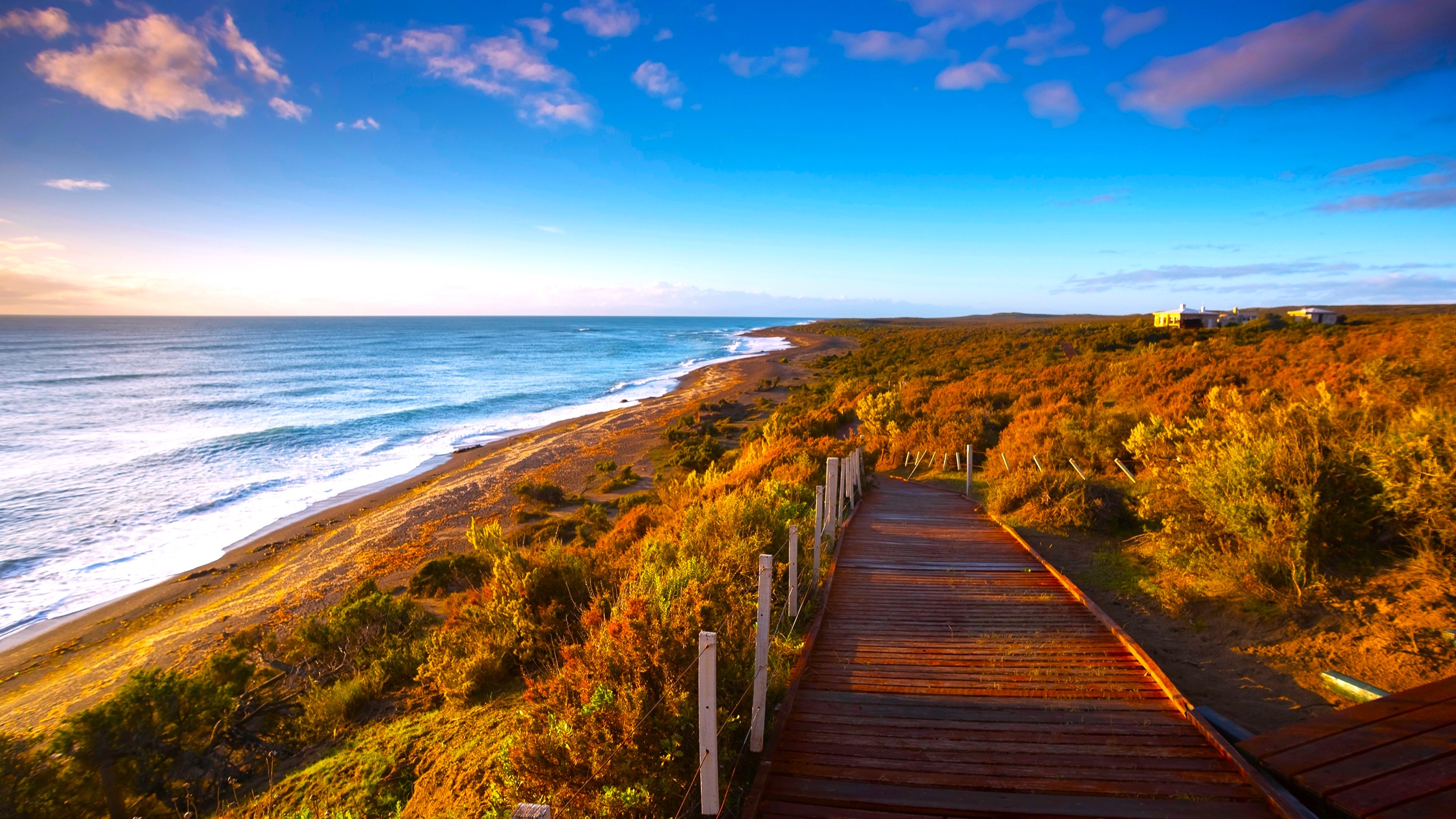
The pebble beach hosts a permanent colony of southern elephant seals (Mirounga leonina) and Patagonian sea lions (Otaria flavescens). Hundreds of individuals rest, spar, and give birth according to the season. Guanacos and maras occasionally cross the coastal scrub zone behind the beach.
History and Context
The Valdés Peninsula has been protected since 1983 as a provincial nature reserve. Its UNESCO inscription dates to 1999, owing to the exceptional concentration of marine mammals. Punta Norte has been known to scientists since the 1970s for the orcas' intentional beaching behavior, studied notably by Argentine researcher Juan Carlos López.
Highlights of Your Visit
Orcas on the Hunt
Between March and April, orcas approach the shore to capture juvenile sea lions in the shallows. Attacks occur at high tide, viewable from a wooden observation platform overlooking the beach. This spectacle is one of the few places on Earth where you can witness it from land.
The Elephant Seal Colony
In August and September, dominant males arrive first to establish territory. Females give birth in September and October. Battles between males—impressive for their violence and noise—are visible from the walkways.
Sea Lions Year-Round
Present permanently, sea lions occupy the beach in dense groups. Young ones play in shallow waves, while adult males patrol the boundaries of their harems.
Photography Tips
Light is best mid-morning, before wind kicks up dust. Use a telephoto lens: animals are at a regulated distance and walkways don't allow closer approach. For orcas, the raking light of late afternoon creates interesting water reflections, though attacks are unpredictable. Bring a UV filter or cloth—salt spray quickly builds up on lenses.
Location and Access
Punta Norte lies at the northeastern tip of the Valdés Peninsula, about 100 km from Puerto Pirámides by dirt track. From Puerto Madryn, allow roughly 2.5 hours of driving. There is no public transport to the site; local agencies offer 4x4 excursions from Puerto Madryn or Puerto Pirámides. The site is not wheelchair-accessible.
Nearby Attractions
- Puerto Pirámides — the peninsula's only village, departure point for boat trips to observe southern right whales.
- Punta Delgada — another cape on the peninsula with an elephant seal colony and a historic lighthouse converted into a lodge.
- Caleta Valdés — an interior lagoon sheltering Magellanic penguins and Commerson's dolphins, along the route between Punta Norte and Punta Delgada.
- Puerto Madryn — the nearest coastal town, with a marine wildlife interpretation museum and access to beaches.
Interested in this visit?
We can include it in your personalised itinerary.